Saturday, July 24, 2010

7. Reading } St. Mark’s Series, NYC


Above, the reading space at Bar 82. Host Greg Purcell (pictured below) announced that this was his final night hosting the St. Mark’s Reading Series; in a week, he runs out of furniture in New York City.


I read an unpublished story (“Holy Ghost”). Kira Henehan followed with an excerpt from Orion You Came and You Took All My Marbles; there’s music in that prose.


Julia Holmes allowed her Mr. Meeks full control of the microphone. We listened to Mr. Meeks, rapt.


The audience was excellent—a modest turnout that filled up the room nicely, including the appearance of good friend Jenna Lawrence. Later, there were noodles. Even later I returned to my hotel room. No dreams there, by the way. An odd moment on the way home, though:

I left Manhattan by train. I read Chambers’ “Yellow Sign.” An hour out of the city I noticed, seated across the aisle and two seats ahead of me, a young woman who looked exactly like a student of mine who was killed shortly after her graduation (she was struck by a motorcycle).

The air on the train was too cold—the young woman stood to get a hoodie to wear over her dress. Embroidered in white on the front of her black dress was a familiar pattern—why familiar I couldn’t say until all at once what at first appeared to be only a symmetrical design coalesced into the face of a horse. We entered a tunnel, and the red light from an exit sign made a long line from the horse’s forehead to the young woman’s throat.

We left the tunnel, the young woman pulled on her hoodie, and sat down. For the rest of the trip I stared out the window.

Tuesday, July 20, 2010

6. Reading } St. Mark's Series, NYC

My last visit to Manhattan was made strange by a dream. At the door to my hotel room I hesitated; I unlocked and opened the door. Something very large stood in the tiny room. Before I could reach into the room for the wall-switch, my eyes adjusted: a horse. It took a single step toward me. Light from the hall lit its massive white face and:

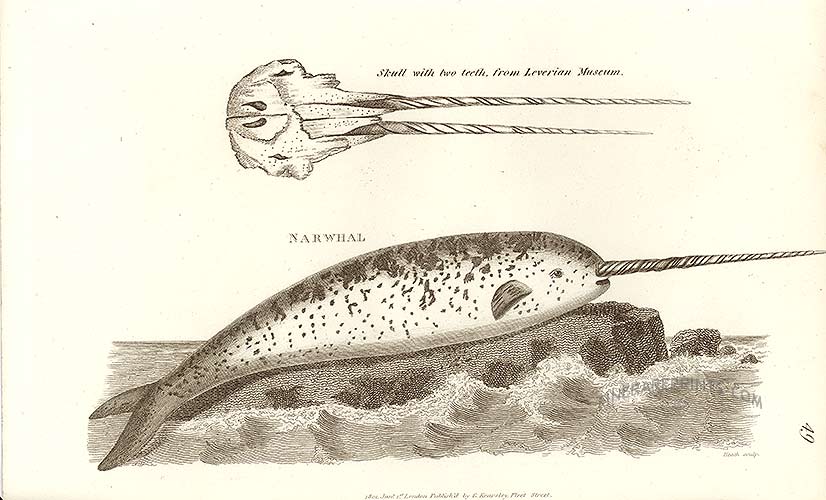
From between its nostrils was erupted a crystal tooth, grown haywire from the horse’s lower jaw, a horn as long as the horse’s head. The horse took another step. A sharp intake of breath. Mine. The yellow-clear crystal horn filled swirling with blood and the horse’s white face became pale blue.

The next morning I woke, fully dressed, on the bed. I’d left the door partially ajar. I had nothing worth stealing, but I looked around on instinct; Watson’s The Double Helix remained on the side table, my papers and pencils on the desk, my bag on the valet, my wallet in my back pocket. My keys were beneath my leg--likely slipped from my pocket during the night. I’d slept through my alarm and missed breakfast.

At home, as I unpacked, I noticed a small tear in the shirt I had slept in, a tear no longer than a paper clip, located just beneath the pocket. Slowly, I touched my chest. I’d ignored a soreness there all afternoon, but then it broadcast in hot ripples.

I won’t make too much of this. I slept on my keys, after all. I booked the same room in the same hotel for this Thursday. I was in Manhattan last month to see John Cotter read from his new novel; I’m returning to Manhattan to read in the St. Mark’s Reading Series. I read with Kira Henehan, author of Orion You Came and You Took All My Marbles, and Julia Holmes, author of Meeks. The reading takes place at Bar 82, on 136 2nd Avenue, between 9th Street and St. Mark's. The reading begins at 7:30pm “sharp.”

Monday, July 19, 2010

5. Worse Than Myself } The Man from the Peak


This is old news.

“The Man from the Peak,” a story original to the Montana half of Worse Than Myself, was singled out by Ellen Datlow for reprint in her Best Horror of the Year (vol. 1). Often stories that appear in best-of anthologies appeared first in hard-to-find, little-known journals or in similarly obscure small press anthologies and collections (as did mine); a best-of can grant these stories a second life in front of a larger readership. That’s why they’re important. They’re better, too, than end-of-the-year lists or industry awards, because there you have it, the thing itself, the story: now you may read it and decide for yourself whether or not to look up an author, a magazine, a press, etc.

(For a brief while it looked as if horror would have an unprecedented wealth of best-ofs, but most never appeared and a couple vanished after only a volume or two; for example, and of interest to me, Horror: The Best of the Year from Prime Books. Volumes for 2007 and 2008 were edited but never appeared. I know about the 2008 edition because Stefan R. Dziemianowicz, its editor, selected “What Water Reveals” (also from Worse Than Myself) to be included.)

Best Horror of the Year (vol. 1) received a good amount of attention because it’s the first in a series more likely than most to last and because it’s pretty good. Reviewers liked it. In as many reviews as not, my story wasn’t mentioned, but in two reviews, my story was singled out. Orrin Grey, for The Innsmouth Free Press, wrote that “‘The Man from the Peak’ might be my favourite story in the book” and Michael Lambe, on his blog, wrote: “…my favorite in the collection is Adam Golaski’s ‘The Man from the Peak’…. It lulls you in, then gradually, dreamily and subtly, creeps you out, and finally brings you face-to-face with pure, unadulterated, bloody HORROR…. That one story alone is worth buying the collection for.”

Perversely, the review of the anthology I enjoy the most is a negative Amazon.com customer review by Vicky Stow. She found it disappointing. She did like one story (“Beach Head” by Daniel LeMoal), and she admits to giving up without reading the last two stories—which are, by the way, “The Man from the Peak” and “The Narrows” (by Simon Bestwick). I ache for Ms. Stow to weigh in on my tale!

(Bestwick’s story is among the finest in the book. LeMoal’s is excellent and unique. “Loup-garou,” by R.B. Russell, does something so fine it must be the best of the bunch. I would be proud to have written any of the three; Russell’s I don’t think I could have.)

Wednesday, July 14, 2010

4. Some Notes } Two Panels at Readercon 2010


On a hill by a rock surrounded by parking lots and with a cup of coffee carried from the hotel, I wrote an introduction for the panel I was to moderate Saturday afternoon called “Down There in the Gutter: The Fiction of the Unpleasant.” I wrote: Here we are on Burlington Mall Road, which is pretty awful. Its designers—presumably humans, presumably not sadists—designed a strip devoid of much pleasantness. Even if all you like to do is shop and suck down Frappachinos, there are much nicer places to do so. Places where you’re not blinded by concrete. If this were the setting for a “literary novel,” it would be called bleak—as it would be called in a horror novel.

I spoke then about Peter Straub’s essay “What About Genre, What About Horror”—the inspiration for the panel. I said that Straub’s essay argues that so-called literary fiction is a) a genre and b) like horror, as it’s “about” low-rent feelings and experiences: adultery, alcoholism, the indignities of ageing, poverty, anxiety, abuse, fear, etc., etc. That this is also the subject of literary fiction is not acknowledged, whereas horror fiction announces that this is exactly its subject —often via intermediaries such as book jackets.

The point of Straub’s essay? Maybe that both genres are potentially the same (especially since so much literary fiction contains elements of fantasy), or at the very least, not so unlike that both genres can’t be taken seriously (or not taken seriously).

The point is also that Straub has ceased to care much about the difference.

The panel sputtered a bit, but Straub contributed some fine thoughts, as did Kathryn Cramer, and Kit Reed and Mike Allen who brought their background in crime journalism to the discussion. Allen, as he notes on his own blog, tended to play devil’s advocate, which helped a little with the sputtering. Barry N. Malzberg seemed wholly uninterested. I have a sneaking suspicion many in the room felt the same way. Still, we had a big turnout, and two brilliant comments from the audience.

Feeling (correctly) wholly unprepared, I moderated a second panel on Sunday called “The 9,191,935,961 Names of God: Metaphysical Hard SF.” Again, I wrote an introduction to focus my thoughts (and, ideally, to guide the panel): If science fiction can examine any subject of concern to us, it must be able to examine concerns not obviously scientific, but philosophical and—as the panel description puts it—spiritual. The title of this panel, though a reference to Olaf Stapledon’s Starmaker, brought to mind that Arthur Clarke story, “The Nine Billion Names of God,” in which a programmer is hired by monks to make a computer that will end the world by writing all the names of God. Clarke’s story—in spite of the computer—is in no way hard SF. Generally, philosophical and spiritual concerns typically lead to soft sf. Forgive the long build up. My first questions are 1) can you [the panelists] speculate on potential hard sf approaches to the “soft sciences” and 2) can you cite extant examples?

I never needed to ask another question. The panelists took off, with great energy, especially Benjamin Rosenbaum and Ron Drummond. Paul Di Fillippo, Ed Meskys, and I contributed when we could and when we did I’d say we did so well. Certainly with pleasure. The audience picked up on our energy, and jumped in with numerous excellent points.

The image above, from NASA, is of star cluster NGC 3603.

Friday, July 2, 2010

3. Readercon } Through which the fearful lovers are to whisper


Readercon has long been important to New Genre. Editor David Hartwell made space for issue #1 on his table in the Readercon bookshop in 2000; most years since, we’ve had our own table. New Genre has never kept a publication schedule (opting instead to wait for not just good but brilliant fiction, drawn exclusively from so-called slush), but when a new issue does manifest, Readercon is where the journal has its debut.

This year, the New Genre table will present two new titles: Jennifer Karmin’s Aaaaaaaaaaalice and the Open Letters Monthly anthology. Of course, issues of New Genre will be available, including #6, where the Stephen Graham Jones story “Lonegan’s Luck” first appeared.

On Friday, between noon and 3, I’ll be a participant in a recitation of A Midsummer Night’s Dream. Roles have yet to be determined, but I’m angling for the part of the wall that stands between Pyramus and Thisbe, as then I’ll be smooch’d on two sides. At 5, I’ll read the Theodore Sturgeon story “The Other Celia,” part of a two-day celebration of Sturgeon’s short fiction.

Saturday afternoon, I’ll question the wisdom of publishing an essay on The Millions, as moderator of a panel called “The Fiction of the Unpleasant,” inspired by an article Peter Straub wrote. Straub will join me, along with Kit Reed, Kathryn Cramer, Mike Allen and Barry N. Malzberg. No, none very esteemed, but nonetheless. At 6:30, during the dinner break, I’ll offer a reading. What I read depends on how antagonistic I feel.

I’ll spend Sunday investigating the apartment directly beneath my own, where I’m certain there’s living a young woman whose skin is paper.

Monday, June 28, 2010

2. Some Notes for an Essay } Nina's Dance


Above, Nina Joly, a former student of mine and a dancer/choreographer.

Notes in response to “Twins,” a dance choreographed by Nina to Calvin Harris’ song “I’m Not Alone.” Harris seems like a fool, but the song is strong; it’s not his anymore anyway. Nina dances w/ Lyz Hazelton.

I’ve no dance vocabulary. Nina reassures: “…most of that stuff doesn't have names anyway.”

[0:15 – 0:22] Early on, when Nina and Lyz turn their backs to us, they put their hands to their thighs/rears (the “rear grab,” as Nina permits me to call it), then move side-to-side for a few steps. They're lifting themselves up, while also doing something that might be crass.


[1:33 – 1: 47] Nina and Lyz here mostly move with their arms, but their hips move too—they keep their feet planted—the movements that aren’t made by their arms appear directly linked to their arms. (This is a moment when I “stood up” and thot, “Oh yeah, that's excellent.”) (Original note: “Yeah! It's the first chorus. That arm stuff! Yeah. Oh, I see. It's NOT just arm movement. You two are moving your whole bodies. That's what makes the arm motions so vivid.”)


[2:30 – 2:50] The strength of small gestures/movements, contrasted with a single bigger gesture (an upsweep of the arm). Often in the choruses.

Embracing, pulling apart. Steps taken together/mirrored, separate motions (“mirrored body movements—that are especially good to watch. two bodies/light waving” [1:50]. ) Nina is the leader but Lyz catches up, creates her own space with movement, and is the aggressor (in the end, she drags Nina from the stage).

The costumes are brilliant. Simple color contrast, dark and light but not black and white (so not obviously binary). The prim tops (pleated and buttoned up to the chin) and skirts (pleated, hem below the knees) allow certain moves to happen without becoming crass (the aforementioned "rear grab") or racy (both Nina [1:59] and Lyz [2:43] shake their shoulders vigorously; in the wrong costume, the only thing I'd see are breasts moving, but because of the costumes, I can see everything that's happening. By covering up, I see more than the dancers). (Nina re. my costume comments, “I’m also really pleased you like the costumes. I had always planned on doing something old-fashioned-ish, but I'm sure you understand how after you think about your own ideas for months and months, you can no longer gauge how things will be perceived. I'm so glad it was a successful choice.” I know what is meant by “old-fashioned-ish”—the costumes are not really old-fashioned at all.)


Wednesday, June 23, 2010

1.

“I found that the men most in repute were all but the most foolish; and that others less esteemed were really wiser and better. I will tell you the tale of my wanderings and of the ‘Herculean’ labors, as I may call them, which I endured only to find at last the oracle irrefutable. After the politicians, I went to the poets; tragic, dithyrambic, and all sorts. And there, I said to myself, you will be instantly detected; now you will find out that you are more ignorant than they are. Accordingly, I took them some of the most elaborate passages in their own writings, and asked what was the meaning of them—thinking that they would teach me something. Will you believe me? I am almost ashamed to confess the truth, but I must say there is hardly a person present who would not have talked better about their poetry than they did themselves. Then I knew that not by wisdom do poets write poetry, but by a sort of genius and inspiration; they are like diviners and soothsayers who also say many fine things, but do not understand the meaning of them. The poets appeared to me to be much in the same case; and I further observed that upon the strength of their poetry they believed themselves to be the wisest of men in other things in which they were not wise. So I departed, conceiving myself to be superior to them for the same reason I was superior to the politicians.”

from "Apology" by Plato, translated by Benjamin Jowett.