Saturday, August 14, 2010

11. Reading } Brookline Booksmith


With a simple, short-range radio device attached to my throat, I controlled the machine pictured above by reading “Holy Ghost.” It’s a burden lugging the machine with me—it weighs as much as a “portable” 1920 Singer sewing machine—but the effect it has on audiences is dramatic, and by all accounts my reading was very much enjoyed. Joy Crelin reported seeing "a weird kind of light map" (pictured below); Liz T. told me she heard—an undercurrent running beneath my story—the low-frequency sounds of blue whales (usually not audible at all!). In the end I’m glad I brought the machine, but I’m not sure how often I’ll be able to.


John read from Under the Small Lights the chapter “The Straw Bed” (“Tell me a story. Tell me about Maybe.”) and from the chapter “Birdlike.” Both very funny but charged with the drama and pain insecurity so easily makes. Before he read—and you won’t believe me, I’m sure—John poured wine for the audience.

After we read, after John and I signed books, John caught up with some old friends who came and I began to browse the used books. While looking at the spines of medieval romances a gentleman handed me a poem, written on a page torn from a Simon & Schuster hardcover (their logo to the left of the handwritten poem—I never saw the title of the book). It was a found poem made of lines from my story. My favorite line is, “toss holy ghost; crisp theory proposed”—in the story, it’s Chris’s theory—I don’t know if “crisp” is a deliberate change or if he just heard me wrong. My thanks to the anonymous poet.

We went for a meal, then, about nine of us. Melissa Goodrum led a toast to our success and to the success of our books. Thank you.

On my way back to my car—a slow walk with that heavy machine—I thought about the conversation I overheard at the college bookstore about that student of mine who was killed—I thought about the strange condition of “some of her organs” and I worried (needlessly, foolishly) about the condition of my own. A Green Line trolley rattled past me then, the lights off in all the cars. The wind that followed the trolley cooled me. I reminded myself: this was a good night.

Wednesday, August 11, 2010

10. Reading } Brookline Booksmith


First, an anecdote: overheard at the college bookstore, two students talking, one of whom I realized was related to that former student of mine who was killed when a motorcycle lost control and careened into her. The relative said, “…what was weird was some of her organs were found partially crystallized. The doctors said she might have been dead before the accident. One of the doctors said, ‘dead on her feet.’ My mom couldn’t take it, she freaked out, she was so angry, I thought she was going to sue them or something.” The other student asked the question I would have asked—at this point I stood hidden behind a bookshelf, listening intently: “What do you mean, crystallized?” The relative said, “Like, encrusted with crystallized blood? I don’t know. I couldn’t ask. My mom was freaking out.”

I debated whether or not I could introduce myself to the relative; by the time I decided I would the two students had gone. I went outside to see if I could spot them, but the parking lot was crowded with freshman (it’s orientation week). I checked on a book order (Richard Rolle’s Fire of Love), and left.

Okay.

Tonight I’ll join Andrea Henchey, C.S. Carrier, and other Hartford-area poets for our monthly Inescapable Rhythms reading at Real Art Ways. The featured poet is Lisa Olstein. That the reading begins at 7pm is a lie.

Tomorrow I’ll be in Brookline (MA) reading with John Cotter. That reading does start at 7pm, and since I consider myself to be John’s opening act, I’d appreciate it if you were there on time. John will read from Under the Small Lights, his new book (steadily gathering praise). He’s an excellent reader, and he’s been reading all summer so he’s in shape.

This is the last reading I’ll do before Color Plates is published (look for it in mid-September). My publishers have arranged a pre-order setup (which somehow includes autographs), and I’ll have copies of my old (though recently re-promoted) book Worse Than Myself on hand. But tomorrow night I’ll read something with the desperate scent of unpublished all over it.

John says he’ll buy you drinks if you go.

Sunday, August 1, 2010

8. Sir Gawain and the Green Knight } A single line.

line 424:

Þat þe scharp of þe schalk schyndered þe bones [Middle English]

scharp = sharp blade, schalk = man, and schyndered = cleave or burst asunder

So that the sharp blade sheared through, shattering the bones [Brian Stone]

That the shock of the sharp blow shivered the bones [Marie Boroff]

So that the man’s sharp blade cut through the bones [R.A. Waldron, in a footnote]

So that the sharp blade shattered the man’s bones [A.C. Cawley, in a footnote]

Cut through bones and skin and fair [Burton Raffel]

So that the sharp edge sundered the man’s bones [W.S. Merwin]

The cleanness of the strike cleaved the spinal chord [Simon Armitage]

That man’s sharp stroke shattered the bones [Adam Golaski]

Note the location of the word “man.” Cawley and Merwin apply “man” to the Green Knight. Waldron applies “man” to “sharp blade”—which could be read as the sharp blade of the Green Knight, though at this point in the poem that sharp blade—the axe the Green Knight carried into Arthur’s hall—is in Gawain’s possession, and is Gawain's (won by accepting the Green Knight's challenge), so Waldron might be applying “man” to Gawain.

Gawain is a man. The Green Knight is not. That’s why I chose to apply “man” to Gawain.

I wrote “that man” instead of “the man” for the repeated “a” sound.

In my translation, it isn’t the blade that’s sharp, but Gawain’s stroke. Sharp is precise, but sharp is also smart—it at least seems smart to chop of the Green Knight’s head. Too bad about about the irrational supernatural.

Like Stone, I chose to shatter the bones. Shatter maintains my alliteration and is a more violent verb than sunder, sheared, shivered, cut, or cleave. My “shattered” is more aggressive than Stone’s “shattering.”

Raffel took words from surrounding lines, which is why his line is so different. Armitage’s solution was to alliterate with “c” as well as “s”—a big departure from the Gawain poet’s original line. I like Armitage’s line.

My translation of the first fitt of Sir Gawain and the Green Knight is featured in this month’s Open Letter’s Monthly. My thanks to editors John Cotter and Steve Donoghue for their hard work in the service of “Green.”

Saturday, July 24, 2010

7. Reading } St. Mark’s Series, NYC


Above, the reading space at Bar 82. Host Greg Purcell (pictured below) announced that this was his final night hosting the St. Mark’s Reading Series; in a week, he runs out of furniture in New York City.


I read an unpublished story (“Holy Ghost”). Kira Henehan followed with an excerpt from Orion You Came and You Took All My Marbles; there’s music in that prose.


Julia Holmes allowed her Mr. Meeks full control of the microphone. We listened to Mr. Meeks, rapt.


The audience was excellent—a modest turnout that filled up the room nicely, including the appearance of good friend Jenna Lawrence. Later, there were noodles. Even later I returned to my hotel room. No dreams there, by the way. An odd moment on the way home, though:

I left Manhattan by train. I read Chambers’ “Yellow Sign.” An hour out of the city I noticed, seated across the aisle and two seats ahead of me, a young woman who looked exactly like a student of mine who was killed shortly after her graduation (she was struck by a motorcycle).

The air on the train was too cold—the young woman stood to get a hoodie to wear over her dress. Embroidered in white on the front of her black dress was a familiar pattern—why familiar I couldn’t say until all at once what at first appeared to be only a symmetrical design coalesced into the face of a horse. We entered a tunnel, and the red light from an exit sign made a long line from the horse’s forehead to the young woman’s throat.

We left the tunnel, the young woman pulled on her hoodie, and sat down. For the rest of the trip I stared out the window.

Tuesday, July 20, 2010

6. Reading } St. Mark's Series, NYC

My last visit to Manhattan was made strange by a dream. At the door to my hotel room I hesitated; I unlocked and opened the door. Something very large stood in the tiny room. Before I could reach into the room for the wall-switch, my eyes adjusted: a horse. It took a single step toward me. Light from the hall lit its massive white face and:

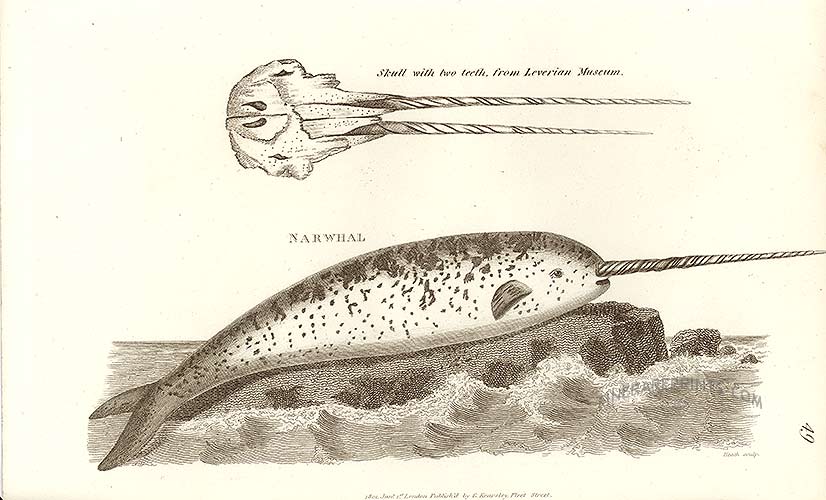
From between its nostrils was erupted a crystal tooth, grown haywire from the horse’s lower jaw, a horn as long as the horse’s head. The horse took another step. A sharp intake of breath. Mine. The yellow-clear crystal horn filled swirling with blood and the horse’s white face became pale blue.

The next morning I woke, fully dressed, on the bed. I’d left the door partially ajar. I had nothing worth stealing, but I looked around on instinct; Watson’s The Double Helix remained on the side table, my papers and pencils on the desk, my bag on the valet, my wallet in my back pocket. My keys were beneath my leg--likely slipped from my pocket during the night. I’d slept through my alarm and missed breakfast.

At home, as I unpacked, I noticed a small tear in the shirt I had slept in, a tear no longer than a paper clip, located just beneath the pocket. Slowly, I touched my chest. I’d ignored a soreness there all afternoon, but then it broadcast in hot ripples.

I won’t make too much of this. I slept on my keys, after all. I booked the same room in the same hotel for this Thursday. I was in Manhattan last month to see John Cotter read from his new novel; I’m returning to Manhattan to read in the St. Mark’s Reading Series. I read with Kira Henehan, author of Orion You Came and You Took All My Marbles, and Julia Holmes, author of Meeks. The reading takes place at Bar 82, on 136 2nd Avenue, between 9th Street and St. Mark's. The reading begins at 7:30pm “sharp.”

Monday, July 19, 2010

5. Worse Than Myself } The Man from the Peak


This is old news.

“The Man from the Peak,” a story original to the Montana half of Worse Than Myself, was singled out by Ellen Datlow for reprint in her Best Horror of the Year (vol. 1). Often stories that appear in best-of anthologies appeared first in hard-to-find, little-known journals or in similarly obscure small press anthologies and collections (as did mine); a best-of can grant these stories a second life in front of a larger readership. That’s why they’re important. They’re better, too, than end-of-the-year lists or industry awards, because there you have it, the thing itself, the story: now you may read it and decide for yourself whether or not to look up an author, a magazine, a press, etc.

(For a brief while it looked as if horror would have an unprecedented wealth of best-ofs, but most never appeared and a couple vanished after only a volume or two; for example, and of interest to me, Horror: The Best of the Year from Prime Books. Volumes for 2007 and 2008 were edited but never appeared. I know about the 2008 edition because Stefan R. Dziemianowicz, its editor, selected “What Water Reveals” (also from Worse Than Myself) to be included.)

Best Horror of the Year (vol. 1) received a good amount of attention because it’s the first in a series more likely than most to last and because it’s pretty good. Reviewers liked it. In as many reviews as not, my story wasn’t mentioned, but in two reviews, my story was singled out. Orrin Grey, for The Innsmouth Free Press, wrote that “‘The Man from the Peak’ might be my favourite story in the book” and Michael Lambe, on his blog, wrote: “…my favorite in the collection is Adam Golaski’s ‘The Man from the Peak’…. It lulls you in, then gradually, dreamily and subtly, creeps you out, and finally brings you face-to-face with pure, unadulterated, bloody HORROR…. That one story alone is worth buying the collection for.”

Perversely, the review of the anthology I enjoy the most is a negative Amazon.com customer review by Vicky Stow. She found it disappointing. She did like one story (“Beach Head” by Daniel LeMoal), and she admits to giving up without reading the last two stories—which are, by the way, “The Man from the Peak” and “The Narrows” (by Simon Bestwick). I ache for Ms. Stow to weigh in on my tale!

(Bestwick’s story is among the finest in the book. LeMoal’s is excellent and unique. “Loup-garou,” by R.B. Russell, does something so fine it must be the best of the bunch. I would be proud to have written any of the three; Russell’s I don’t think I could have.)